
Subtitle vs closed caption refers to two different text-based systems used in videos to display spoken dialogue and audio information on screen.
Subtitles mainly translate or transcribe spoken dialogue for viewers who can hear the audio but may not understand the language.
Closed captions, on the other hand, include not only dialogue but also non-speech elements like sound effects, speaker identification, and background noises, making content fully accessible for deaf or hard-of-hearing users.
In 2026, both subtitles and closed captions play a major role in global streaming platforms like YouTube, Netflix, and social media reels.
While they may look similar, their purpose, functionality, and accessibility impact are very different.
Understanding subtitle vs closed caption is essential for creators, editors, and viewers who want better accessibility, engagement, and content clarity in today’s digital-first media world.
What Are Subtitles and How Do They Work in Videos
- 🎬 Subtitles display spoken dialogue in text form for better understanding
- 🌍 They are mainly used for translating foreign language content
- 🎧 Subtitles assume the viewer can hear audio clearly
- 📺 Common on Netflix, YouTube, and OTT platforms
- 🗣️ They focus only on spoken words, not sound effects
- 📱 Often customizable in size and language settings
- 🎥 Help viewers follow fast or unclear dialogue scenes
- 💡 Improve global accessibility for multilingual audiences
- 🔊 Do not describe background sounds or audio cues
- 🧠 Used widely in education and entertainment content
- 🎞️ Typically appear at the bottom of the screen
- 🌐 Essential for international video distribution
- 🧾 Can be manually or automatically generated
- 📊 Boost watch time on social media videos
- 🎯 Improve content comprehension for non-native speakers
- 🧑💻 Popular among creators targeting global reach
- ⚡ Lightweight and simple text overlay system
- 🎤 Focus only on dialogue transcription
- 📈 Increase engagement in silent viewing environments
- 🎬 Widely supported across all major platforms
- 💬 Designed for language understanding, not accessibility
What Are Closed Captions and Why They Matter
- ♿ Closed captions are designed for accessibility support
- 🔊 Include sound effects like [door slams] or [music playing]
- 🗣️ Show speaker identification in conversations
- 📺 Used by deaf and hard-of-hearing audiences
- 🎧 Provide full audio context, not just dialogue
- 📱 Common on TV broadcasts and streaming apps
- 💡 Improve understanding in noisy environments
- 🎥 Essential for compliance in many countries
- 🧠 Help viewers follow complex audio scenes
- 📊 Increase retention and engagement rates
- 🎯 Include emotional and environmental audio cues
- 🧾 Can be turned on or off (closed system)
- 🌍 Support accessibility laws and standards
- 🎬 Often more detailed than subtitles
- 🔥 Improve inclusivity in digital content
- 🧑🏫 Used in education and training videos
- ⚡ Help non-native speakers understand context better
- 🎤 Capture tone and speaker changes
- 📈 Boost SEO for video content indexing
- 💬 Designed for full audio representation
- ♿ Core tool for digital accessibility compliance
Key Differences Between Subtitles and Closed Captions
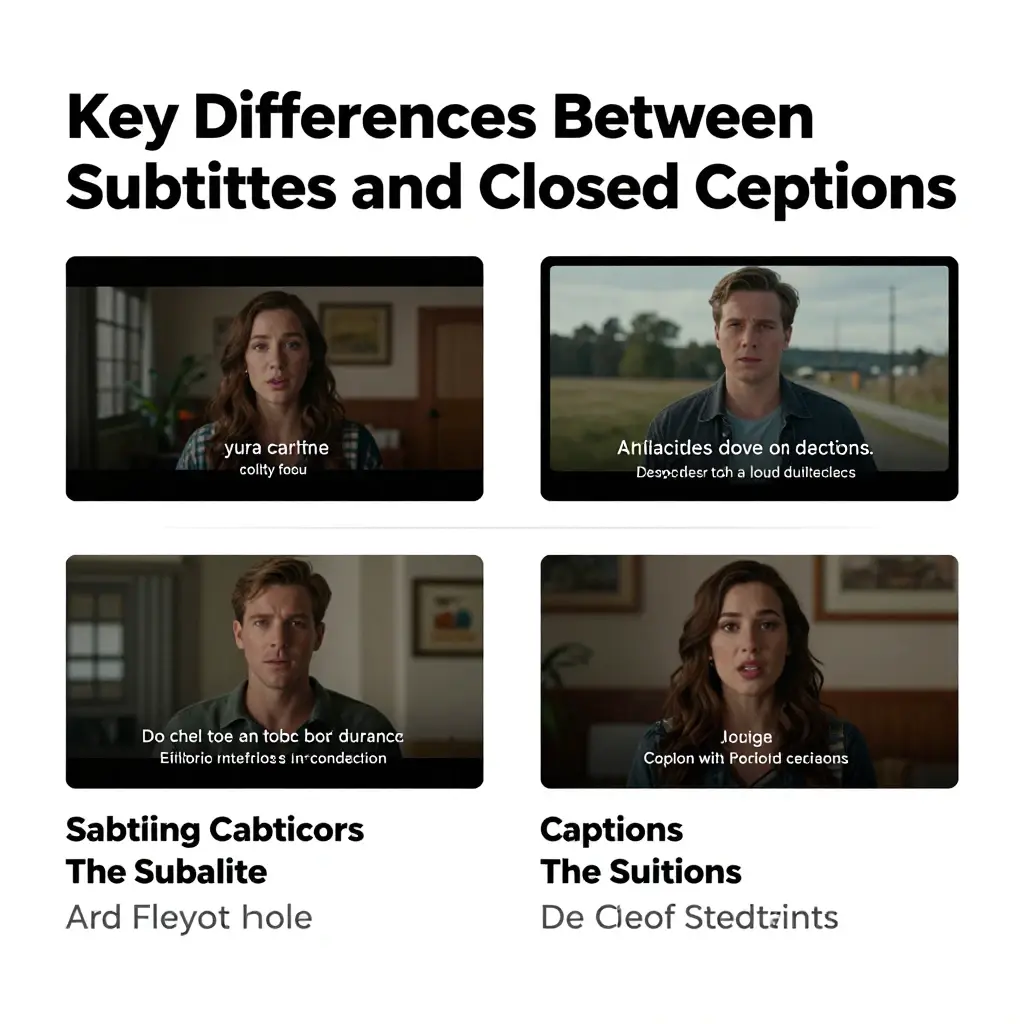
- 🎬 Subtitles focus on dialogue only, captions include sounds
- 🔊 Closed captions describe audio cues like laughter or noise
- 🌍 Subtitles often translate languages, captions usually don’t
- ♿ Captions are designed for hearing-impaired users
- 📺 Subtitles assume audio is audible to viewer
- 🎧 Captions work even when sound is off
- 📱 Subtitles are simpler and lighter text overlays
- 🧠 Captions provide full context of audio experience
- 🎥 Subtitles don’t include speaker identification
- 🗣️ Captions clearly label who is speaking
- 📊 Subtitles mainly help language understanding
- 🔥 Captions improve accessibility and compliance
- 🎬 Subtitles are optional translation tools
- 🧾 Captions are accessibility-required in many regions
- 🌐 Subtitles support multilingual viewing
- 💡 Captions support full sensory experience
- 🎤 Subtitles ignore background sound elements
- 🔊 Captions include non-verbal audio details
- 📈 Captions improve inclusivity and reach
- 🎯 Subtitles are viewer convenience tools
- ♿ Captions are accessibility necessities
Types of Subtitles Used in Modern Streaming Platforms
- 🌍 Foreign language subtitles for translation
- 🎬 Same-language subtitles for clarity improvement
- 📱 SDH subtitles (Subtitles for Deaf and Hard of Hearing)
- 🎧 Automatic AI-generated subtitles on YouTube
- 🧠 Manual professional subtitles for accuracy
- 📺 Real-time live subtitles for broadcasts
- 💡 Burned-in subtitles embedded into video permanently
- 🎥 Soft subtitles that can be turned on/off
- 🌐 Multi-language subtitle tracks on OTT platforms
- 🧾 Fan-made subtitles for global communities
- 🎤 Educational subtitles for learning platforms
- 📊 SEO-optimized subtitles for video indexing
- 🔊 Audio-synced subtitles for real-time playback
- 🎬 Movie theatrical subtitles for cinemas
- 📱 Mobile-first short video subtitles
- 🧑💻 AI-translated subtitles for global reach
- ⚡ Fast-generated captions for reels and shorts
- 🎯 Context-aware subtitles for storytelling
- 💬 Simplified subtitles for children
- 🌟 Enhanced subtitles with styling options
- 📈 Interactive subtitles in modern apps
Types of Closed Captions in 2026 Digital Media
- ♿ Standard closed captions for accessibility compliance
- 🔊 Real-time live captions for streaming events
- 📺 Broadcast captions for TV programs
- 🎧 SDH captions with sound effects and speakers
- 🧠 AI-generated auto captions for social media
- 🎥 Edited professional captions for accuracy
- 📱 Mobile optimized captions for short videos
- 🌍 Multi-language closed caption systems
- 🧾 Regulatory captions required by law
- 💡 Enhanced captions with styling and positioning
- 🎬 Cinema closed caption systems
- 📊 Interactive captions for learning platforms
- 🔥 Dynamic captions synced with speech patterns
- 🎤 Speaker-differentiated captions
- ⚡ Instant captions for live webinars
- 🧑🏫 Educational accessibility captions
- 🌟 Emotion-tagged captions in advanced AI systems
- 📈 SEO-friendly captions for video indexing
- 💬 Context-rich captions for storytelling
- 🧠 Smart adaptive captions using AI
- ♿ Universal accessibility caption formats
Why Subtitles Are Important for Global Content Consumption
- 🌍 Break language barriers instantly
- 📈 Increase global audience reach
- 🎬 Improve understanding of foreign films
- 📱 Boost engagement on social media videos
- 🧠 Help non-native speakers learn languages
- 💡 Enhance clarity in fast speech content
- 🎧 Support silent viewing environments
- 📺 Improve binge-watching experience
- 💬 Make dialogue easier to follow
- 🔊 Reduce misunderstanding in noisy settings
- 🎯 Increase retention on educational content
- 🌟 Improve storytelling experience
- 📊 Help creators grow international audiences
- 🎥 Essential for global OTT success
- 🧾 Increase content accessibility options
- ⚡ Improve user satisfaction rates
- 🧑💻 Support SEO indexing of video content
- 💕 Make content more inclusive
- 🚀 Help videos go viral globally
- 🌈 Enhance user experience
- 🎬 Drive cross-border entertainment growth
Why Closed Captions Are Essential for Accessibility
- ♿ Support hearing-impaired audiences
- 🔊 Provide full audio context understanding
- 🎧 Include environmental sound descriptions
- 🧠 Improve cognitive understanding of content
- 📺 Required for compliance in many regions
- 📱 Ensure accessibility on all devices
- 🎥 Make video inclusive for everyone
- 💬 Clarify speaker identity in dialogues
- 🌍 Promote equal content access globally
- 📊 Increase engagement for silent viewers
- 🔥 Help users in noisy environments
- 🧾 Meet legal broadcasting standards
- 🎯 Improve learning outcomes in education
- 💡 Enhance user experience design
- 🎬 Support professional broadcasting quality
- ⚡ Enable real-time accessibility in live streams
- 🧑🏫 Assist students with learning disabilities
- 🌟 Improve overall video usability
- 📈 Increase watch time and retention
- 💕 Build inclusive digital communities
- ♿ Core part of modern UX design
Subtitles vs Closed Captions in SEO and Video Ranking
- 📈 Captions improve video search indexing
- 🎬 Subtitles help multilingual keyword reach
- 🌍 Both increase global discoverability
- 💡 Captions improve accessibility ranking signals
- 🧠 Search engines read caption text for SEO
- 📺 Videos with captions rank higher on platforms
- 🔥 Subtitles increase watch time indirectly
- 🎧 Captions improve engagement metrics
- 📱 Better retention boosts algorithm ranking
- 💬 Text data helps AI understand video content
- 🎯 Improves voice search visibility
- 🚀 Increases content distribution potential
- 🌟 Enhances YouTube SEO performance
- 📊 Boosts metadata relevance signals
- 🧾 Helps content indexing accuracy
- ⚡ Improves click-through rates
- 💕 Enhances audience satisfaction
- 🎥 Improves recommendation system reach
- 🌈 Adds semantic depth to content
- 🧑💻 Strengthens content authority
- 📈 Essential for modern video SEO strategy
Common Mistakes People Make When Using Subtitles or Captions
- ❌ Using subtitles instead of captions for accessibility
- ❌ Ignoring sound effects in closed captions
- ❌ Poor timing between audio and text
- ❌ Automatic captions with incorrect grammar
- ❌ Missing speaker identification
- ❌ Overcrowded text on screen
- ❌ Not translating properly for global viewers
- ❌ Low readability font choices
- ❌ Ignoring mobile optimization
- ❌ Wrong placement on screen
- ❌ No consistency in formatting
- ❌ Poor punctuation in captions
- ❌ Skipping audio context details
- ❌ Not testing on multiple devices
- ❌ Using machine translation blindly
- ❌ Missing live caption synchronization
- ❌ Ignoring SEO optimization
- ❌ Overlapping captions with visuals
- ❌ Lack of accessibility compliance
- ❌ Not updating outdated subtitle files
- ❌ Poor quality control process
Future of Subtitles and Closed Captions in 2026 and Beyond
- 🚀 AI-generated real-time multilingual captions
- 🌍 Instant global translation during live streams
- 🧠 Emotion-aware captioning systems
- 🎥 Fully automated accessibility workflows
- 📱 Smart adaptive captions based on user preference
- 💡 AR and VR integrated captions
- 🔊 Voice-to-text precision improvements
- 🎬 Hyper-personalized subtitle experiences
- 📊 SEO-optimized auto-caption systems
- 🌟 Context-aware AI subtitle generation
- 🧑💻 Creator-controlled caption customization tools
- ⚡ Faster live caption processing speeds
- 💕 Inclusive media standards worldwide
- 📺 Platform-wide accessibility enforcement
- 🎯 Smarter speech recognition accuracy
- 🌈 Multimodal video understanding systems
- 📈 Algorithm-friendly caption optimization
- 🧾 Universal caption formatting standards
- 🔥 Deep learning enhanced transcription systems
- 🎧 Real-time translation earbuds integration
- 🚀 Fully immersive accessible media future
FAQs:
1: What is the main difference between subtitles and closed captions?
A: Subtitles only show spoken dialogue, while closed captions include sound effects, speaker IDs, and audio context.
2: Are subtitles and captions the same thing?
A: No, they look similar but serve different purposes—subtitles for language, captions for accessibility.
3: Which is better for SEO: subtitles or captions?
A: Closed captions are better for SEO because they include more detailed text data.
4: Do captions work when sound is off?
A: Yes, closed captions are designed to work even when audio is muted.
5: Why are captions important for accessibility?
A: They help deaf or hard-of-hearing users understand video content fully.
6: Can subtitles improve video engagement?
A: Yes, subtitles increase comprehension, watch time, and global reach.
Conclusion:
Understanding subtitle vs closed caption is essential in today’s content-driven digital world.
While subtitles help break language barriers and improve global communication, closed captions ensure accessibility, inclusivity, and full audio understanding for all users.
In 2026, both play a powerful role in user experience, and video performance across platforms like YouTube, Netflix, and social media apps.
Creators who use them correctly can significantly increase engagement, reach, and ranking potential.
If you’re a viewer or content creator, mastering the difference helps you consume and produce better digital content.
Start using the right system today and make your content more powerful, accessible, and globally optimized.

Amelia Wright is a passionate digital writer and creative voice behind some of the most engaging captions on the internet. She specializes in crafting unique, aesthetic, and viral-ready captions for Instagram, TikTok, and social media platforms that help users express their emotions, moods, and stories effortlessly.